


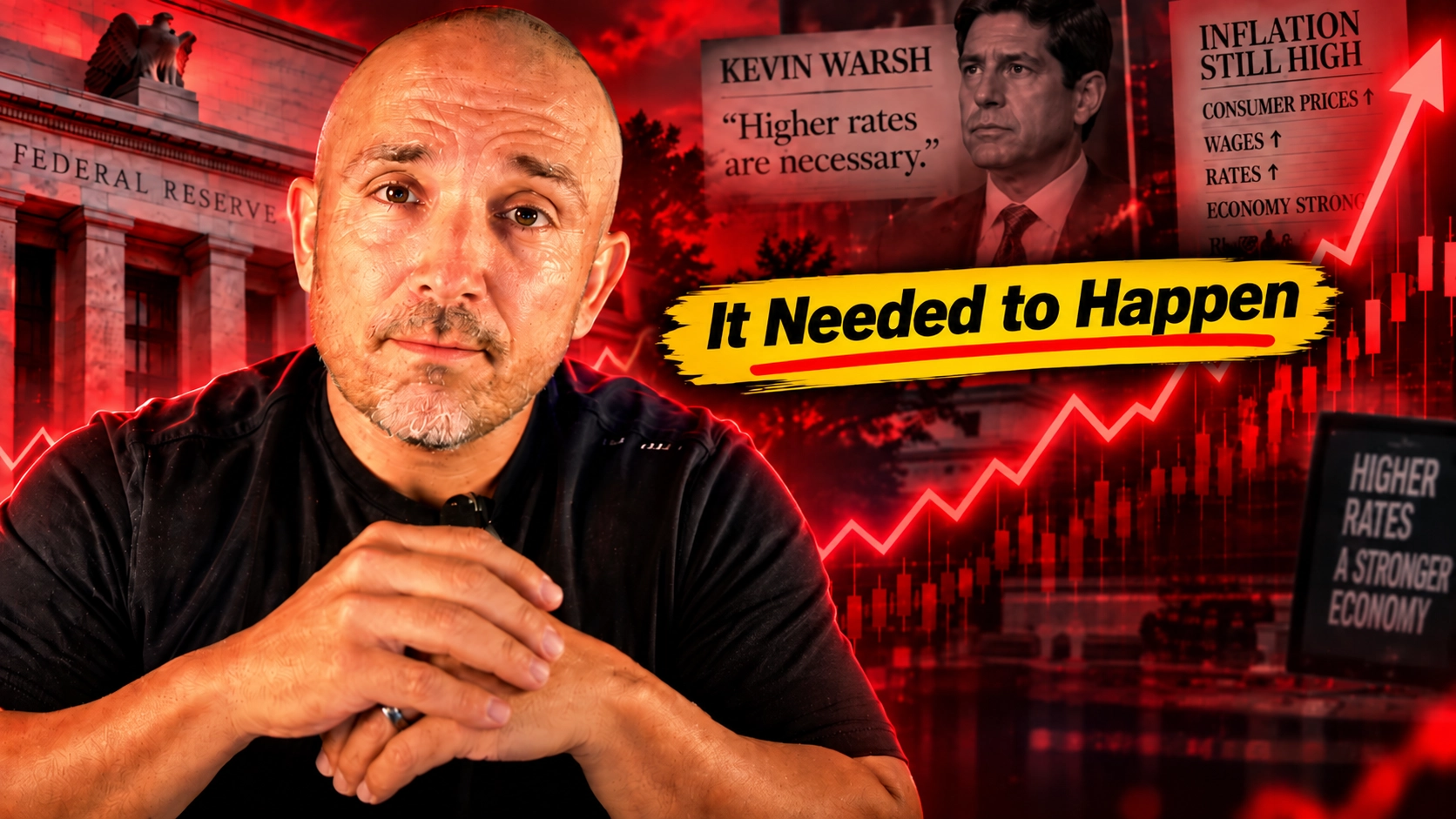
I'm happy the Fed hiked rates.
Yes. You read that right.
Jimmy, how in the world could you say such an absurd thing?
Because I think it needed to happen.
If we want mortgage rates to eventually come back down in a meaningful and sustainable way, we have to deal with one of the biggest things standing in their way.
Inflation.
Let me explain.
The Fed Funds Rate is NOT the mortgage rate
This is probably the most important distinction in this entire article.
When you hear that “the Fed raised rates,” it does not mean Fed Chair Kevin Warsh raised the 30-year mortgage rate.
The Federal Funds Rate, in its simplest form, is the rate associated with overnight lending between financial institutions. But changes to that rate ripple through the economy.
Raise it, and borrowing generally becomes more expensive. Credit cards. HELOCs. Auto loans. Business loans.
As borrowing becomes more expensive, consumers and businesses tend to spend less. That is intentional.
The Federal Reserve uses monetary policy to pursue two primary goals: stable prices and maximum employment.
When inflation is running too hot, raising short-term rates is one of the Fed’s primary tools for cooling demand. The goal isn't necessarily to make prices go down. It’s to slow how quickly they continue going up.
So why am I happy the Fed raised rates?
Because the alternative could ultimately be worse for mortgage rates.
Inflation is one of the biggest enemies of long-term bonds. And mortgage rates are influenced heavily by the bond market, not simply by the Federal Funds Rate.
Think about it this way. If you're lending somebody money for the next 10 years, you care about what those dollars will be worth when you get paid back.
If inflation stays elevated, those future dollars buy less. So investors tend to demand a higher return.
Higher required returns can mean higher long-term yields. And higher long-term yields can put upward pressure on mortgage rates.
What happened at last week's Fed meeting
That brings us to last week's Fed meeting. Chair Warsh's message was straightforward: the economy remains resilient. Inflation is still a problem.
One of the Fed's preferred inflation gauges is the PCE Price Index (Personal Consumption Expenditures). Think of it as an inflation scorecard measuring changes in the prices consumers are paying for goods and services.
The latest headline PCE reading was 3.7%. The Fed's longer-term target? 2%. That's still a meaningful gap.
So last week, the Fed raised the Federal Funds Rate by 0.25%, bringing the target range to 3.75%–4.00%.
But the hike itself wasn't the most interesting part.
Back in June, the median Fed projection had the Federal Funds Rate around 3.6% at the end of 2027. Last week? That projection moved to approximately 4.1%. That's a significant change.
Translation: the Fed is signaling that inflation may require higher rates for longer.
And believe it or not, that could eventually be good for mortgage rates.
Why the bond market needs to believe the Fed
The bond market needs to believe the Fed is serious about getting inflation under control.
If investors think inflation will stay elevated, they may demand higher yields to own long-term bonds. That can keep pressure on mortgage rates.
But if they believe the Fed will do what it takes to restore price stability, inflation expectations can settle. Long-term bond yields can stabilize. And eventually, that can create a healthier environment for mortgage rates to move lower.
Here's the irony. The Fed can raise short-term rates while creating conditions that could eventually allow long-term mortgage rates to fall.
That's the part I think most people miss.
Inflation is the water
Imagine we're sitting in a boat and water starts pouring in. Nobody is happy the boat has a leak. But once it does, you want someone pumping the water out.
Inflation is the water. The Fed's rate hike is part of the pump.
The challenge is removing enough water to solve the problem without damaging the economy in the process. That's the delicate dance of monetary policy.
If inflation begins moving convincingly back toward 2%, the Fed eventually gets more room to take its foot off the brake. More importantly for homebuyers, bond investors may become more comfortable accepting lower long-term yields.
That's the path I'm watching.
The bottom line
So next time you hear “The Fed raised rates,” don't automatically translate that into “Mortgage rates just went up.”
They're two different things.
And strangely enough, this Fed rate hike may eventually be part of what allows mortgage rates to come back down.
That’s why I’m trying to keep mortgages made simple.